Subscribe To Bay State Kitchen Garden


 Posts
All Comments
Posts
All Comments
Friday, March 16, 2012
The Sound of Spring
Listen to this for the sound of frogs-- we call them 'spring peepers', but it is actually several species- calling from the pond across the road from my house.

Thursday, March 8, 2012
Yeah Spring! Spinach and garlic and chives and rosemary and chard, oh my.
So last week we had snow, but it did not last long. Here's a pic I took before I left for work.
 By the time I got home it was melted.
Meanwhile, I planted spinach in the coldframe on 2/26, and it sprouted on 3/5.


Meanwhile, I planted spinach in the coldframe on 2/26, and it sprouted on 3/5.


The garlic is sprouting nicely.
And the chives I started from seeds last year are now good clumps.

One patch of swiss chard overwintered.


And I even had one of two rosemary plants survive.
Meanwhile, I'm starting seeds inside-- more on that next post.
Sunday, February 26, 2012
Digging towards spring
Yes, I'm ready to start gardening! The weather was warm enough last week to start turning over the soil in the new bed along the fence, and to begin to expand the edges of the shrub and perennial bed off the right side of the stone patio. I plan to plant winter squash in the couple of feet of new curve beyond the arching cotoneaster. I 'm looking forward to vines wandering among the flowers.
The fence bed needs to be especially well dug because it is going to be planted with asparagus, a perennial crop. I was worried that it would be full of rock and roots (this is New England!), but I only found a few, including this one I dispatched with my saw. Tree roots lack the flexible fibers of stems, and break easily, so the best technique for most smaller roots is just to snap them of with a sharp upward pull.

 I also dug a hole and planted a ten foot high walnut branch ( a hurricane remnant) in the bed made from trex decking, then anchored it further by tying it to a metal post I pounded in next to it. Walnut is a hard wood, and this pole for beans or morning glories (but not both together, because the morning glories will win) should last several years.
I worked on the shape of the flower bed curves for quite a while, with Sol supervising.
 Here's the curve at the end of the day. It was getting cold and very windy. I will look at the shape for a couple of weeks before I dig up the rest of the grass. Although my raised beds are efficient and geometric, I enjoy the whimsy and freedom of curves in the rest of the garden, and the art of getting them right for my eye.

The fence bed needs to be especially well dug because it is going to be planted with asparagus, a perennial crop. I was worried that it would be full of rock and roots (this is New England!), but I only found a few, including this one I dispatched with my saw. Tree roots lack the flexible fibers of stems, and break easily, so the best technique for most smaller roots is just to snap them of with a sharp upward pull.


I worked on the shape of the flower bed curves for quite a while, with Sol supervising.


Friday, February 10, 2012
Under construction-- A cold frame and a cedar raised bed
The weather is still mild. I built a frame out of an old 12" plank and a piece of 6" cedar between two existing raised beds, laid a salvaged vinyl-coated window over it and made a coldframe. I'm going to mix some manure into the soil and start spinach under it on March 1.
 The gap on the right will keep it from overheating, and I can lay an old towel over it on cold nights.
I also learned that cedar splits easily, and so used coated deck screws, gently driven, to build my next project, a 16' by 4' by 12" cedar bed strengthened by 12" high chunks of 4 by 4 pressure treated lumber.
 It was almost dark by the time I attached the lower tier of cedar, which is the most precise part of the
job. I'll finish the top soon, and then put sand under the 4 by 4's and level it before filling it with compost and topsoil. This year I'm going to plant this new bed with tomatoes or potatoes, and next year I'll extend the fence to enclose it so I can grow the tastier crops (to rabbits, I mean) like lettuce and peas.
I used three extension cords to get my old corded drill to the spot, but it did the job. Why replace it? It still works fine, even if cordless drills are all the rage-- god, I sound like a crotchety old lady! -"Those young folks with their fancy drills"- but I'm just trying to spend mindfully.
Here are all the tools I needed: The screws even came with a drill bit.


I also learned that cedar splits easily, and so used coated deck screws, gently driven, to build my next project, a 16' by 4' by 12" cedar bed strengthened by 12" high chunks of 4 by 4 pressure treated lumber.
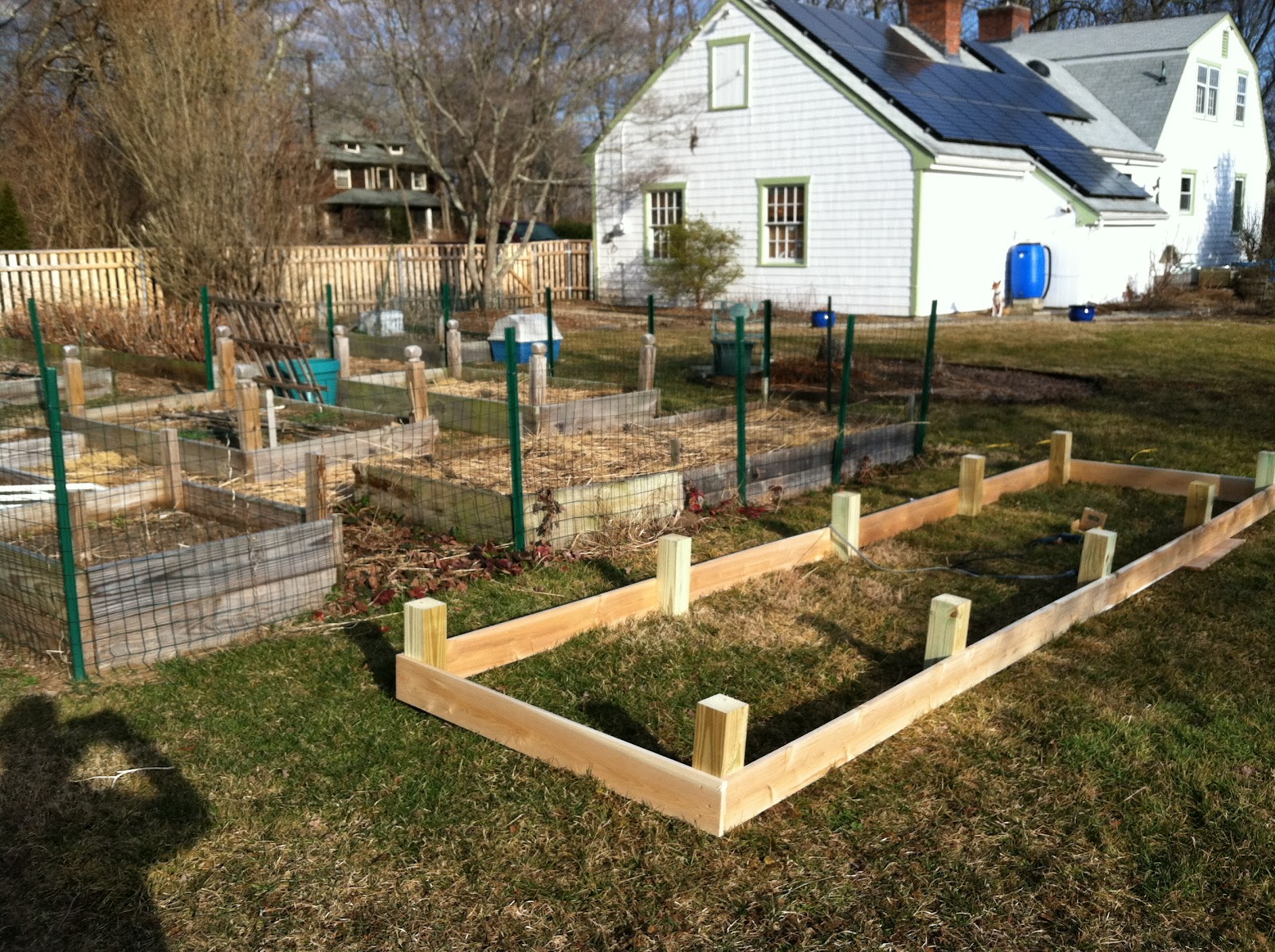
job. I'll finish the top soon, and then put sand under the 4 by 4's and level it before filling it with compost and topsoil. This year I'm going to plant this new bed with tomatoes or potatoes, and next year I'll extend the fence to enclose it so I can grow the tastier crops (to rabbits, I mean) like lettuce and peas.
I used three extension cords to get my old corded drill to the spot, but it did the job. Why replace it? It still works fine, even if cordless drills are all the rage-- god, I sound like a crotchety old lady! -"Those young folks with their fancy drills"- but I'm just trying to spend mindfully.
Here are all the tools I needed: The screws even came with a drill bit.

Thursday, February 2, 2012
Fun with a Bastard File

I used it to sharpen the edges of my hedge trimmers and loppers, and it worked. Just a few passes with the file over the edge made them cut much more cleanly, with less force.


Then I spread the resulting straw on the garden paths.


Tuesday, January 24, 2012
Tidying and planning
A warm day in January, especially after a run of sharp cold, seems like midsummer. I was out in the garden in the afternoon, acting on some plans I'd been fomenting during the cold snap. 


First I laid some scraps of wood on the ground by the buddleia next to the path. I'm using them to mark the edge of an expansion of the bed I'm planning this spring. Here's a picture:

This new edge will create a spot for a patch of pepper plants. I have a tough time with rotation of members of the nightshade family (tomatoes, peppers, potatoes) because I grow so many of them. That's why most new beds get planted with one of the three the first year. I'll also put peppers and tomatoes in the new bed by the fence, a spot that now gets plenty of sun since the hurricane knocked down an overhanging tree. I t's full of leaves right now, and is Sol's favorite hangout on sunny winter days.
And I moved the eight foot by four foot recycled plastic railroad tie bed from next to the grapes (they need more room) to alongside the old sixteen by four foot bed, paired up with the trex bed (just in the frame on the right). I like having three beds made of different materials next to each so I can compare their durability.

All three of these new beds need soil. I plan on bringing in a couple of pickups of compost from a local nursery and combining it with the horse manure that's aging under a tarp in the front garden. I ordered blue potatoes this winter, and they'll go in the moved railroad tie bed.

Finally, I cut back the raspberries. They'll need some manure too.... maybe on the next warm day I should visit the horse farm.
Thursday, January 12, 2012
Catalogs and choices

cultivars . Or so I dream in January.
I make lists in my mind and on scraps of paper, comparing prices and shipping rates. I also compare the various offers from companies for ordering early. Most offers are matches, as in 'Buy $50 of merchandise, get $25 worth free', but one company lets you buy $25 worth of products (with the attached coupon) without having to purchase anything more. I promptly wrote up an order totaling $24.79 including shipping, and mailed it off.
If they were looking for my loyalty, they won't get it-- everything in the catalog was double the price of most others. There must be a lot of suckers that spend enough over $25 to make the coupon worth while. I will be kind and not mention the name of this company since I may (I 'll believe it when it comes) be getting free stuff from them, but I won't be a loyal customer at those prices.
Other companies give good value, but I can buy their seeds locally and avoid shipping. A regional discount store carries Burpee seeds at 40% off, and after I read their catalog I visit the store and pick some of my choices off the rack. The selection is limited, but I always find a few good varieties, and at just over a $1 a packet, they are a great deal. Or at least I think so...
Because another trick of the seed trade that I'm sure has been going on forever, but which I've only noticed lately, is the lack of uniformity in volume descriptions. Some companies list the packets contents in grams, some in number of seeds, some just say 'packet' . It's tough to compare value without a standard measurement. Burpee puts grams on the store packets, but seed numbers in the catalog-- so I can't tell if the catalog packets hold more for the money.
I actually prefer small packets. I get enough seed for a season, and not much left. That's fine, because most seed only has a suggested shelf lie of a year of two. That's one of the reasons I bought most of my seeds from Pinetree Garden Seeds in Maine this winter. They are a New England company, with experience in the region, sell small packets of seeds for home gardeners, and carried most of the seeds I wanted and could not find on the Burpee racks. I ordered a few seeds from them last year, and they did well, so this winter I've given them the rest of my modest order. They are also a family owned company, and I hope this balances out my purchases from the Burpee empire.
What about the many other wonderful catalogs with beautiful pictures and lots of info on growing? Don't I owe them some business for providing me with hours of dreaming? Nope. They made their pitch, and it didn't work for me, so I owe them nothing. I'm not going to feel guilty, even when they email me helpful newsletters.... really. Sorry, Johnny's Seeds, maybe next year.
Subscribe to:
Posts (Atom)